
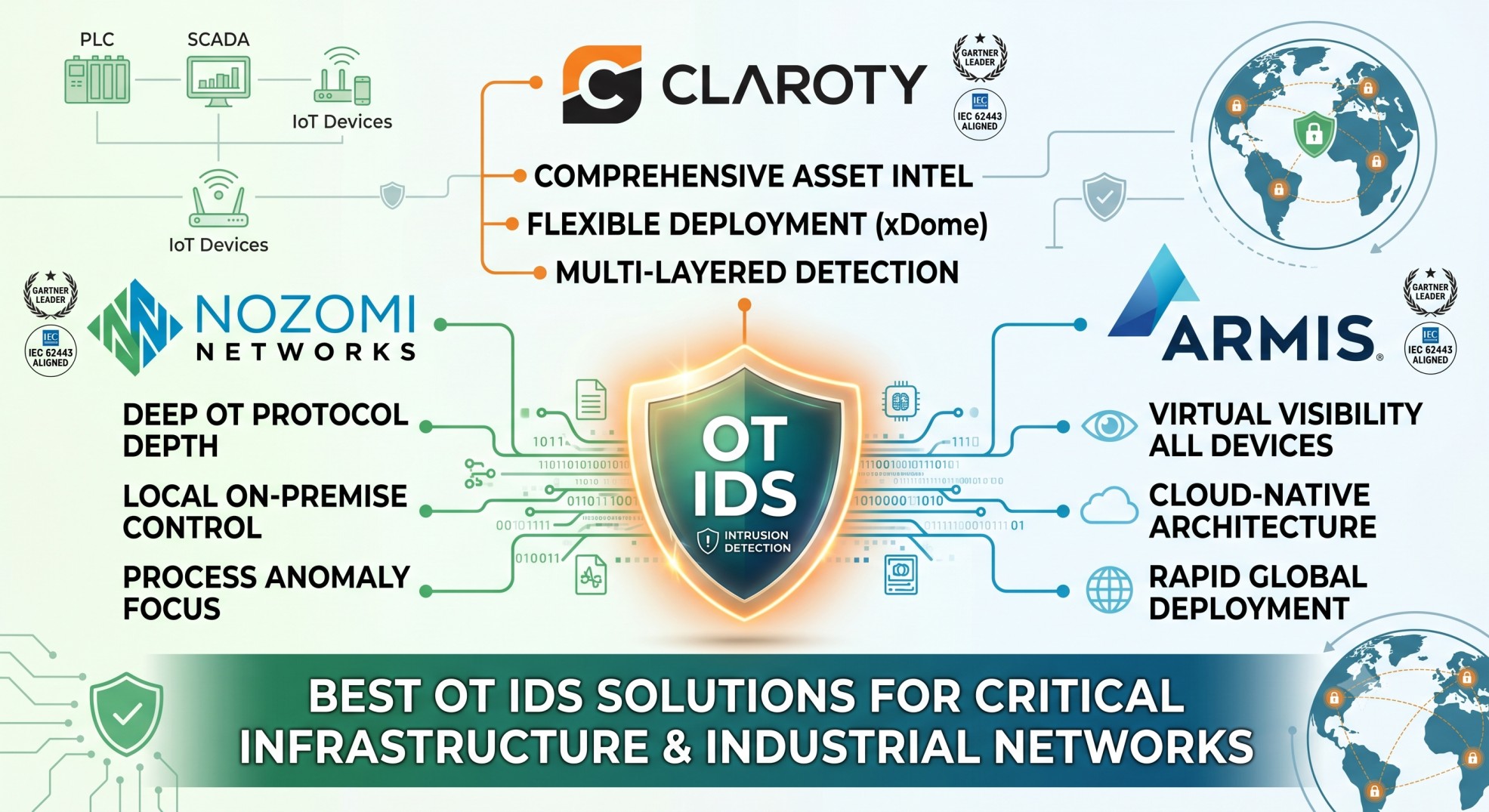
Operational Technology (OT) is the backbone of critical infrastructure and industrial operations, encompassing systems like Supervisory Control and Data Acquisition (SCADA) and Industrial Control Systems (ICS). Protecting these vital systems from cyber threats is paramount, as disruptions can lead to significant physical consequences. Intrusion Detection Systems (IDS) play a crucial role in safeguarding OT networks by identifying malicious activity and potential security breaches. In this article, we’ll delve into three leading IDS solutions for OT: Nozomi Networks, Claroty, and Armis, providing a detailed comparison of their key features, strengths, and suitability for different OT environments.
The Importance of IDS in OT Networks
OT networks often employ legacy systems with proprietary protocols and lack the inherent security features common in modern IT networks. This makes them vulnerable to attacks that can disrupt production, compromise safety, or cause physical damage. Traditional IT IDS solutions often fall short in OT environments due to their inability to understand OT protocols and the potential for active scanning to impact real-time systems. OT-specific IDS solutions, therefore, are essential for:
-
Deep Visibility: Understanding the specific devices, protocols, and communication patterns inherent to OT environments.
-
OT-Specific Threat Detection: Identifying threats that target industrial systems, including specific malware and unauthorized command-level activities.
-
Minimal Disruption: Utilizing passive monitoring techniques to detect threats without impacting the critical, real-time nature of OT systems.
-
IT/OT Convergence: Facilitating collaboration between IT and OT security teams by providing a unified view of security across the entire enterprise.
Comparative Analysis of Nozomi, Claroty, and Armis
Nozomi Networks, Claroty, and Armis are prominent players in the OT security landscape, each offering a distinct approach to IDS. Let’s explore their key features and how they compare:
| Feature | Nozomi Networks | Claroty | Armis |
| Deep OT Protocol Coverage | Excellent | Very Good | Good |
| Asset Discovery | Strong (Passive) | Strong (Multi-faceted) | Very Strong (Cloud-Based) |
| Threat Detection Methods | Anomaly & Signature | Anomaly & Signature | Behavioral Baseline (Cloud-Based) |
| Deployment Architecture | Local On-Premise First | On-Premise or Cloud (xDome) | Cloud-Native |
| IT Integration | Mature & Well-Integrated | Mature & Comprehensive | Strong & Cloud-Centric |
| IoT/Enterprise Coverage | Good (Evolving) | Good (Broadening) | Exceptional (Genesis in IoT) |
Nozomi Networks: Deep Process Awareness and Local Control
Nozomi Networks is known for its deep understanding of industrial processes and its emphasis on local control. Its “Guardian” system excels at:
-
Anomaly Detection: Establishing a baseline of normal operation and communication patterns within OT networks, and quickly alerting to any deviations that indicate potential security risks or operational anomalies.
-
OT Protocol Depth: Covering a wide range of standard and proprietary OT protocols, allowing for granular visibility into command-level activities.
-
On-Premise Deployment: Primarily deployed as local appliances or virtual machines, Nozomi offers greater control over data and minimizes reliance on cloud connectivity.
Claroty: Comprehensive Visibility and Flexible Deployment
Claroty offers a broad range of capabilities and flexible deployment options. Key strengths include:
-
Asset Intelligence: Deep asset discovery and contextualization, providing a clear picture of the assets within the OT environment, including their configurations and vulnerabilities.
-
Multi-Faceted Threat Detection: Utilizing a combination of anomaly detection, signature-based rules, and sandboxing to identify known and unknown threats.
-
xDome Platform: Its cloud-based xDome platform offers scalability and ease of deployment for organizations that are comfortable with a hybrid architecture.
Armis: Broad Asset Visibility and Rapid Deployment
Armis stands out for its extensive asset visibility and cloud-native approach. It excels at:
-
“One Tool to Find Them All”: Unparalleled visibility into all connected assets, including IT, OT, and the often-overlooked IoT devices, across the entire enterprise.
-
Cloud-Native Architecture: Leveraging a massive global cloud-based database to analyze asset behavior and identify deviations from “known good” patterns, enabling rapid detection without impacting local systems.
-
Speed of Deployment: Requiring only light, local edge sensors or existing network hardware, Armis offers significantly faster deployment across distributed global sites.
Choosing the Best Fit for Your Organization
The best IDS solution for your OT environment depends on your specific needs, including:
-
Critical Infrastructure & High-Risk Environments: Nozomi Networks’ focus on deep process anomaly detection and local control makes it a strong contender for critical infrastructure sectors like power, water, and oil and gas.
-
Large Industrial Enterprises with Hybrid Architectures: Claroty’s comprehensive platform and flexible deployment options, including xDome, offer a suitable solution for large industrial operations seeking broad visibility and adaptability.
-
Enterprises with Converged IT/IoT/OT Environments: Armis’ unique capability to identify all connected assets makes it ideal for organizations with complex environments where visibility is paramount, such as manufacturing and healthcare.
Conclusion
Nozomi, Claroty, and Armis each offer powerful IDS solutions for OT, but their distinct approaches make them suitable for different use cases. Carefully evaluating your organization’s security needs, architectural requirements, and risk profile is key to selecting the “best fit” solution that provides the necessary level of protection for your vital OT assets.
In addition to IDS, consider implementing other security layers in your OT network, such as network segmentation, strong access controls, and regular vulnerability assessments. By adopting a comprehensive security strategy, you can build a resilient OT infrastructure that is less vulnerable to cyberattacks.
Related Resources
-
Gartner Peer Insights Operational Technology Security: Compare Nozomi Networks, Claroty, and Armis based on user reviews and ratings.
-
NIST Special Publication 800-82: Learn more about protecting industrial control systems from cyber threats.
-
IEC 62443 Standards: Explore international standards for industrial network and system security.