
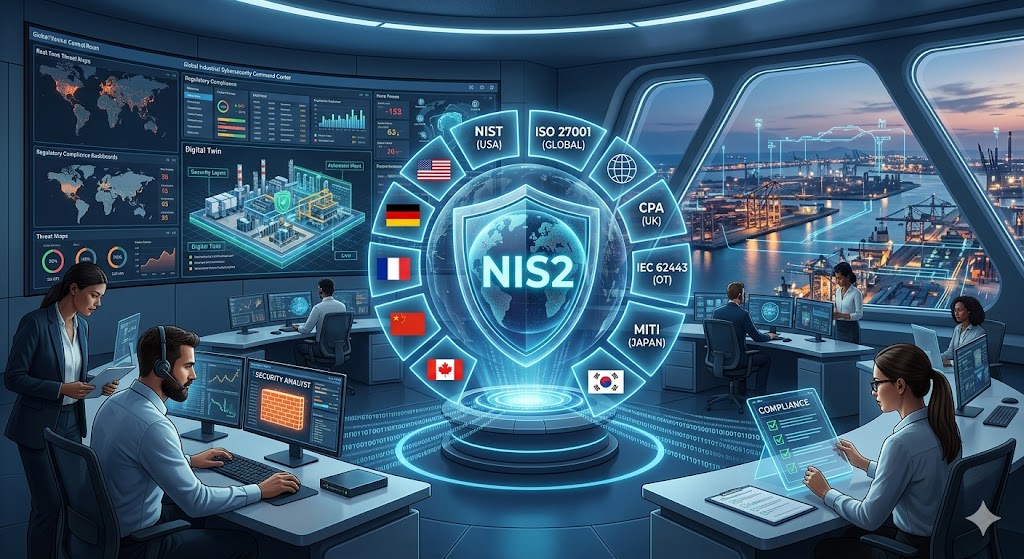
The industrial landscape is undergoing a massive digital transformation, but with increased connectivity comes increased risk. As critical infrastructure becomes more integrated with global networks, regulatory bodies are stepping up. Chief among these is the European Union’s NIS2 Directive, which sets a new benchmark for global industrial cybersecurity compliance.
The NIS2 Directive: A New Standard
The Network and Information Security (NIS2) Directive is the most comprehensive cybersecurity legislation in Europe to date. Unlike its predecessor, NIS2 significantly expands the scope of covered sectors, bringing industries like manufacturing, energy, transport, and digital providers under strict oversight.
Key Requirements of NIS2 include:
-
Management Accountability: C-suite executives can be held personally liable for gross negligence in the event of a cyber incident.
-
Incident Reporting: Organizations must report significant incidents within 24 hours of becoming aware of them.
-
Supply Chain Security: Companies must address security risks in their supply chains and supplier relationships.
-
Risk Management: Mandatory implementation of basic cyber hygiene, encryption, and multi-factor authentication (MFA).
Global Alignment: IEC 62443 and NIST
While NIS2 is European legislation, its impact is global. For multinational corporations, compliance is not just about the EU; it’s about aligning with international frameworks like ISA/IEC 62443 (for Operational Technology) and the NIST Cybersecurity Framework.
Global compliance now requires a unified approach that bridges the gap between Information Technology (IT) and Operational Technology (OT).
Strategies for Compliance
To stay ahead of these evolving requirements, industrial leaders are focusing on three core pillars:
-
Visibility: You cannot protect what you cannot see. Gaining a full inventory of every asset on the factory floor is the first step toward compliance.
-
Segmentation: Implementing “Zero Trust” architectures and network segmentation ensures that if a breach occurs in the IT network, it cannot easily migrate to critical OT systems.
-
Continuous Monitoring: Compliance is no longer a “one-and-done” audit. Real-time threat detection and continuous monitoring are essential to meet the rapid reporting requirements of NIS2.
The Path Forward
For industrial organizations, cybersecurity is no longer just a technical hurdle—it is a business imperative. The shift toward strict global compliance reflects a world where the physical and digital are inseparable. By adopting a proactive stance toward NIS2 and international standards, companies not only avoid heavy fines but also build the resilience necessary to thrive in an increasingly volatile digital age.